What to Expect From A Stray Line
A clear-eyed preview of Sprout Haven's art-driven adventure — story tone, characters, combat pressure, and mature themes from official sources.
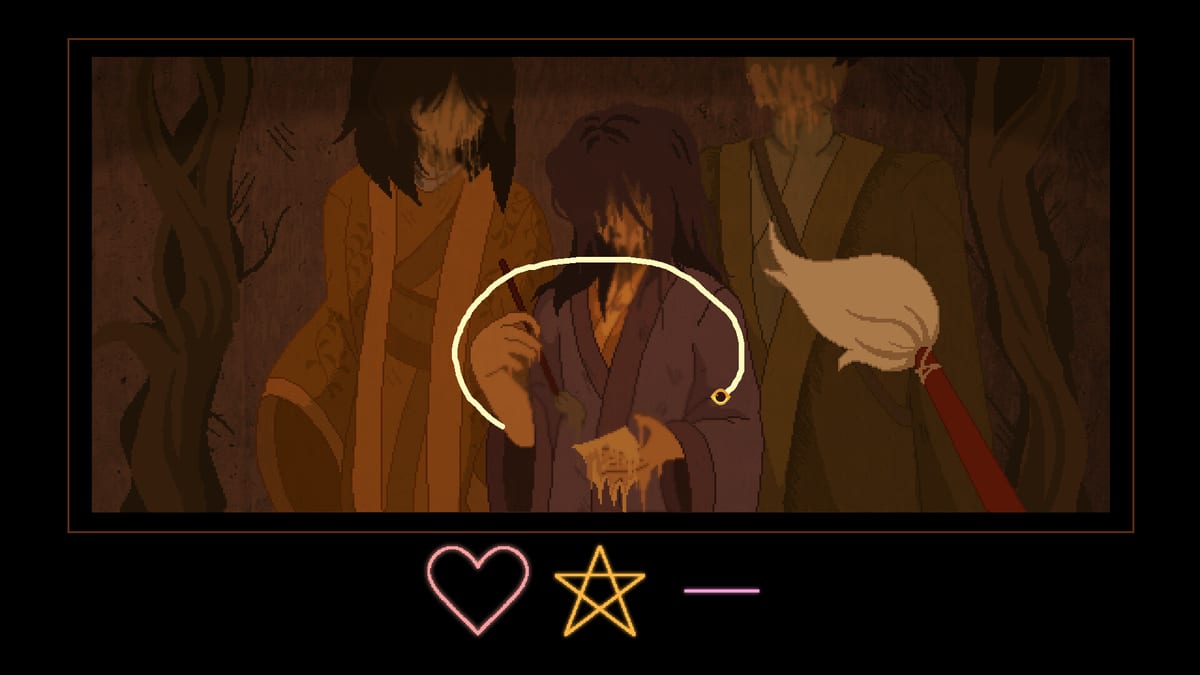
Before you wishlist A Stray Line on Steam or block out time for the Chapter 1 demo in August 2026, it helps to know what kind of experience Sprout Haven is building. This is not a final review — the four-chapter game is still in development — but it is an honest preview assembled from the Steam store page, announcement materials, and public developer commentary. If you want setup checklists instead of tone discussion, jump to the Demo Checklist; if you want dates and hardware, see System Requirements.
The elevator pitch
A Stray Line is a point-and-click adventure about art and found family. You explore strange woodlands, speak with NPCs, solve environmental puzzles, and draw symbols in a notebook to cast spells. Combat layers real-time drawing on top of that adventure spine: projectiles threaten Taoyi, and you draw the associated symbols to defend and counter. The marketing phrase “cozy horror” fits because the game pairs domestic warmth — siblings teasing, a father recovering from injuries, stray animals — with imagery and themes that can disturb.
Story setup without spoiler deep cuts
You play Taoyi Feng, a child who wakes to find her home, belongings, and surrounding forest changed. People no longer remember her face or the misfortune she brought loved ones. Holes appear in floors you cannot see through. Something may have granted a clean slate, and the narrative asks whether Taoyi can make herself worth forgiving this time.
That premise is emotionally heavy even before horror imagery. It is not a power fantasy about saving the world; it is intimate, family-scaled drama with magical framing.
Cast you will meet early
Official character blurbs on Steam establish the found-family circle:
Taoyi Feng — A child with abundant love for stars, woodlands, and the people who took her in when she had nothing.
Atlas Feng — Former big-city painter and mage, now living quietly with two adoptive children in a forest clearing while recovering from injuries.
Winslow Feng — Taoyi’s older sibling who teases, performs in homemade costumes, and brings levity that balances darker beats.
Ilya Svetlov (“Mr. Ilya”) — Atlas’s multifaceted friend — gardener, driver, embroiderer, fisherman on call — who feels omnicompetent through a child’s eyes.
The Tube — An unexpected neighbor whose presence signals the world is stranger than the clearing suggests.
Expect dialogue-driven characterization and environmental storytelling rather than constant cutscene cinematics. Adventure veterans should read every inspectable object; Sprout Haven hides tone in details.
Gameplay loop preview
Exploration uses classic point-and-click verbs: examine hotspots, combine items if the demo follows genre norms, talk through conversation trees. Keyboard and mouse are the default; touch and drawing tablets are supported for notebook interactions.
Spellcasting happens through the notebook UI. Public footage shows drawing shapes that trigger effects — developer posts have referenced simple pattern tests such as star shapes firing star-themed results. Recognition cares about readable geometry more than artistic shading.
Combat is not turn-based. Threats approach in real time; you respond with the symbol tied to what you see. Each chapter is expected to culminate in one major boss encounter, so pacing likely alternates quiet investigation with spikes of focus. If you dislike timed drawing, consider whether the adventure story alone justifies play on lower difficulty or accessibility options if offered at launch.
Tone: cozy and horrific at once
Store marketing mentions autumnal love and body horror in the same breath. Screenshots show warm pixel environments and hand-drawn CG moments; content warnings mention illustrated gore, dissociation, children in distress, death, and cursing.
That combination targets players who liked melancholic indie adventures but want sharper edges — not players seeking purely relaxing farming sim vibes. Take the warning seriously if you are sensitive to child harm depictions even when fictional.
Demo scope versus full game
Chapter 1 is labeled the demo and planned as free ahead of the paid four-chapter release. Demo scope typically means one narrative arc, introduction of core mechanics, and a boss — enough to judge writing and combat but not to resolve the full mystery.
Do not expect the demo to include every character’s complete arc or all spell shapes the full game will use. Treat Chapter 1 as a vertical slice for wishlist decisions.
Production and presentation
Sprout Haven highlights hand-drawn CGs, animations, strange art exhibits inside the world, and scrappy stray animals as helpers. Audio and voice details may evolve before demo launch; interface language support currently lists English on Steam for UI at minimum.
Visually, the game sits in a pixel-friendly adventure space with illustrated emotional beats — closer to narrative indies with artbook sensibilities than to AAA 3D horror.
Drawing combat: expectation setting
You do not need professional illustration skills, but you do need consistent strokes under mild pressure. Practice methodology lives on Symbol Practice — we deliberately avoid publishing a fake complete symbol encyclopedia because public sources have not verified every glyph.
Hardware-wise, mouse works; many players will prefer pens for angular shapes. Verify input before boss attempts using the Demo Checklist.
Who this game is for
Strong fit if you enjoy:
- Emotional found-family stories with fantasy undertones.
- Adventure puzzles that reward observation.
- Novel combat verbs tied to art metaphors.
- Supporting solo developers via wishlist and Kickstarter visibility.
Weak fit if you need:
- Combat-free or purely cozy experiences without distress imagery.
- Fast action unrelated to reading and drawing.
- Fully localized VO in multiple languages at demo launch — verify at release.
How to follow development responsibly
Wishlist on Steam for automated demo alerts. Follow the Kickstarter campaign for funding milestones without assuming backing is required to play Chapter 1. Join Discord for spoiler-tagged discussion.
Official links and wiki hubs are mapped on the Links page. Release timing details sit on Demo Wishlist.
After you read this
If the tone still appeals, watch the announcement trailer on the Review hub and the Chapter 1 trailer on Demo Wishlist. Then run the checklist, confirm your PC or Mac meets System Requirements, and bookmark the Walkthrough for demo week routing help.
Frequently Asked Questions
Quick answers drawn from what players ask most.
Is A Stray Line appropriate for children?
The developer lists mature themes including illustrated gore and children experiencing harm or distress. Parents should read Steam content warnings and preview footage before allowing younger players.
Will the demo spoil the entire story?
Chapter 1 introduces the premise and core mechanics but the four-chapter arc continues afterward. Expect emotional hooks and cliffhangers, not full resolution.
How scary is the body horror compared to the cozy elements?
Marketing presents both in parallel — domestic warmth and sharp horror imagery. Individual tolerance varies; this page flags the mix so you can decide before downloading.